LevelIntermediate
Suitable forTeens and adults, and confident child readers
You needAbility to read the Quran
FormatLive one-to-one online
LanguagesEnglish, Urdu, Arabic, Pashto
Suggested planStandard or Premium
Course overview
About the Quran with Tajweed Course
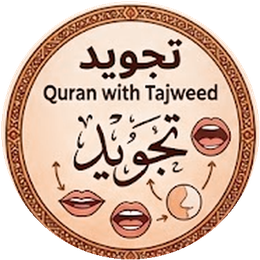
Tajweed is the science of reciting every letter from its proper place, with its proper qualities, and with the rules that connect one word to the next. Our Quran with Tajweed course teaches it step by step, always tied to real verses so the rules never feel abstract.
You will not be asked to memorise long lists in isolation. Each rule is introduced, explained with simple examples and then found in the Quran itself. Your teacher listens as you recite, points out where a rule applies and helps you apply it naturally.
The result is recitation that is clearer, more beautiful and more accurate, and a much deeper awareness of how the Quran is meant to sound.
Who is it for?
- Learners who can read the Quran but want to recite it correctly
- Adults who were never taught Tajweed formally
- Teenagers and children with solid reading skills
- Hifz students who want accurate memorisation
Why it matters
Why Learn Quran with Tajweed Online?
Careful recitation is a matter of respect for the words. Small differences in pronunciation can change how a word sounds, and Tajweed gives you the tools to recite exactly as the Quran has been passed down.
It also makes learning easier in the long run. Learners who know the rules recite more confidently, memorise more accurately and need fewer corrections over time.
Syllabus
What You Will Learn, Stage by Stage
The course is divided into clear stages. Your teacher moves you on only when you are ready, so you can spend longer on any stage that needs it.
Stage 1: Where letters come from
You learn the points of articulation, so each letter leaves the mouth or throat in the right place.
- Throat, tongue, lips and nasal passage
- Heavy and light letters
- Practising letters in isolation and in words
Stage 2: Noon, meem and tanween rules
These are the rules you will meet most often, so we spend real time on them with plenty of examples.
- Clear pronunciation, merging, flipping and hiding
- Rules for meem with sukoon
- Ghunnah and how long to hold it
Stage 3: Madd and qalqalah
Long sounds and the slight echo on certain letters are practised in verses until they feel natural.
- Natural and extended madd
- How long each madd lasts
- Qalqalah on its five letters
Stage 4: Lam, ra and stopping rules
The final stage covers letters whose sound changes with context, along with correct stopping and starting.
- When lam and ra are heavy or light
- Rules for stopping on a word
- Putting every rule together in longer passages
Teaching method
How Your Lessons Run
Each lesson starts by recalling a rule from last time, then adds one new rule. The teacher demonstrates, you copy, and together you find the rule in real verses. Mistakes are corrected on the spot, with a short explanation of the reason.
Between lessons you receive a small passage to practise with the newly learned rule, so what you learn in class travels into your daily recitation.
By the end of the course
- Pronounce letters from their correct places
- Apply the main rules of noon, meem and madd
- Recite with correct ghunnah and qalqalah
- Stop and start in the right places
- Recite longer passages with confidence
Common worries
Challenges Learners Face, and How We Help
Too many rules at once
We introduce rules one at a time and revisit them often, so nothing piles up.
Rules that feel theoretical
Each rule is practised in real verses straight away, so you hear and feel how it works.
Old habits that are hard to change
Gentle, repeated correction helps new habits replace old ones without discouragement.
Plans and timing
Choosing a Plan for This Course
Every plan includes live one-to-one classes, flexible timing and a free three-day trial first. The number of classes you take each week sets how quickly you move.
For this course we suggest Standard or Premium. You can always begin on a lighter plan and move up later if you want to progress faster.
Starting is easy
- Book your free three-day trial.
- Tell us your preferred teacher and timings.
- Attend your trial classes.
- Choose a plan if you wish to continue.
Questions
Frequently Asked Questions About This Course
Can I learn Tajweed without Arabic knowledge?
You do need to be able to read the Quran first. Arabic grammar is not required, and your teacher explains every rule in simple language.
Is Tajweed obligatory?
Many scholars teach that reciting properly is part of respecting the Quran. If you would like more guidance, your teacher can share the explanation in the language you prefer.
Will I need to memorise all the rules?
You will learn the rules, but the focus is on applying them while you recite rather than reciting definitions.
Can children take this course?
Children who can already read the Quran confidently can begin, usually with a lighter pace and shorter examples.
What if I have never studied Tajweed before?
That is perfectly fine. We start from the first rule and go at your speed.
Keep exploring
Where to Go Next
Try Quran with Tajweed Free for Three Days
Meet your teacher, hear how a real class feels and decide afterwards. There is nothing to pay and no commitment.